
You bought Epicor P21 to run your distribution business. It handles inventory, orders, purchasing, and accounting. On paper, it's the backbone of your operation. But somewhere along the way, you ended up with a handful of other systems that P21 doesn't know exist. And now you're paying the price.
Maybe it's a vendor portal that requires manual order entry. Maybe it's a CRM where your sales team tracks opportunities that never sync back to customer records. Or maybe it's something as simple as needing real-time inventory data in a dashboard that P21's built-in reporting can't deliver. Whatever it is, you've got people re-keying data, chasing down discrepancies, and building spreadsheets to bridge the gaps.
This isn't really a P21 problem. It's an integration problem. And it's fixable.
Why P21 Ends Up Isolated
P21 is a powerful system, but it was designed in an era when ERP was expected to do everything. The assumption was that you'd run your whole business inside one application. That's not how modern operations work.
Today, you probably have a shipping system that's better at rate shopping than P21's built-in tools. You might have an ecommerce platform your customers expect. Your vendors have portals they want you to use. Your executives want dashboards that update in real time, not reports that run overnight.
None of this is unreasonable. P21 just wasn't built with the expectation that it would need to share data constantly with a dozen other systems. Its integration capabilities exist, but they require intention and effort to use well.
The result is that many distributors end up with P21 as a data silo. Information goes in, but getting it out (or getting external data in) becomes a manual process.
The Real Cost of Disconnected Systems
The obvious cost is labor. Every time someone re-keys an order from a vendor portal into P21, that's time spent on work that adds no value. Every time someone builds a spreadsheet to reconcile inventory between systems, that's time not spent on customers or growth.
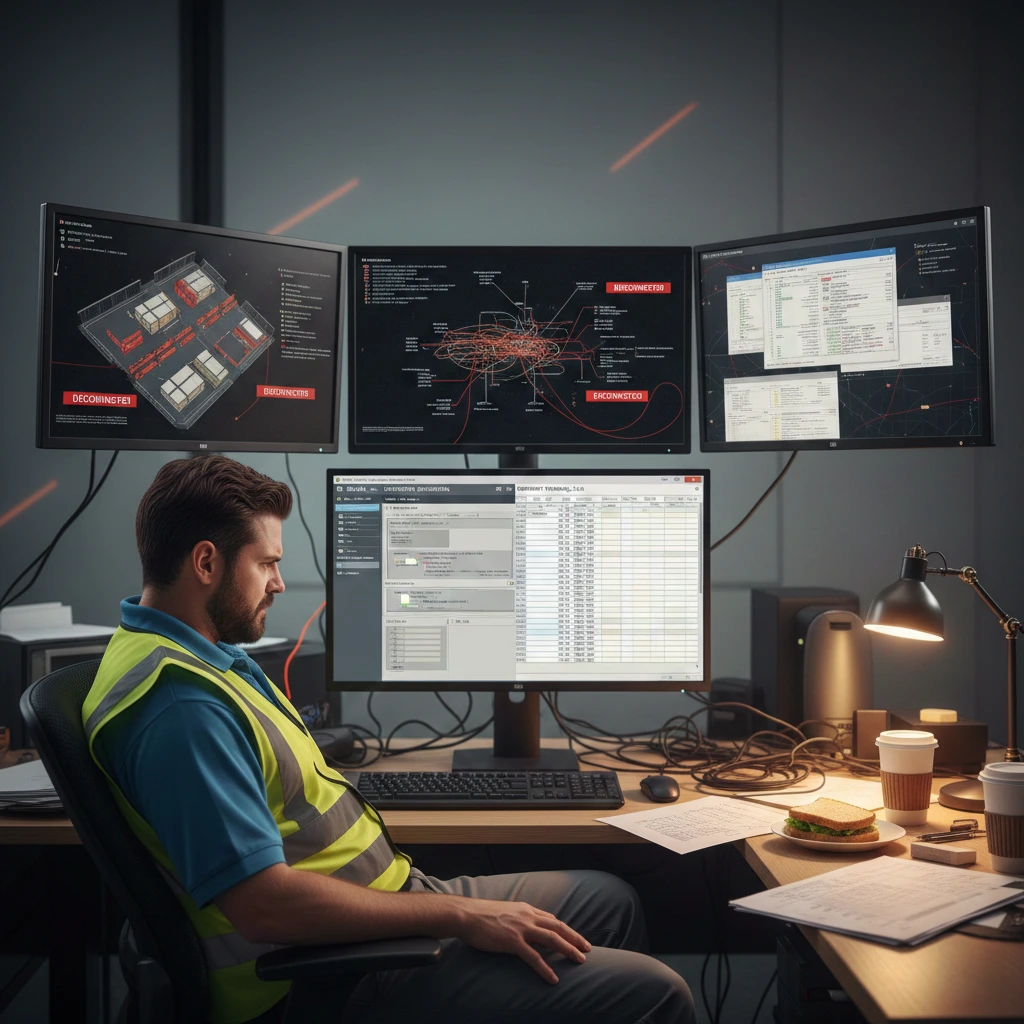
The less obvious costs are actually bigger. Disconnected systems mean delayed information. When your CRM doesn't know that a customer's order shipped, your sales team looks uninformed. When your purchasing team can't see real-time inventory across locations, they overbuy or miss stockouts. When your executives can't get current data without asking someone to run a report, they make decisions based on information that's already stale.
These delays compound. A customer calls to check on an order, and your team has to dig through multiple systems to answer a simple question. A vendor pricing change doesn't make it into P21 until someone notices the margin erosion weeks later. Opportunities slip through because nobody connected the dots in time.
What Good Integration Looks Like
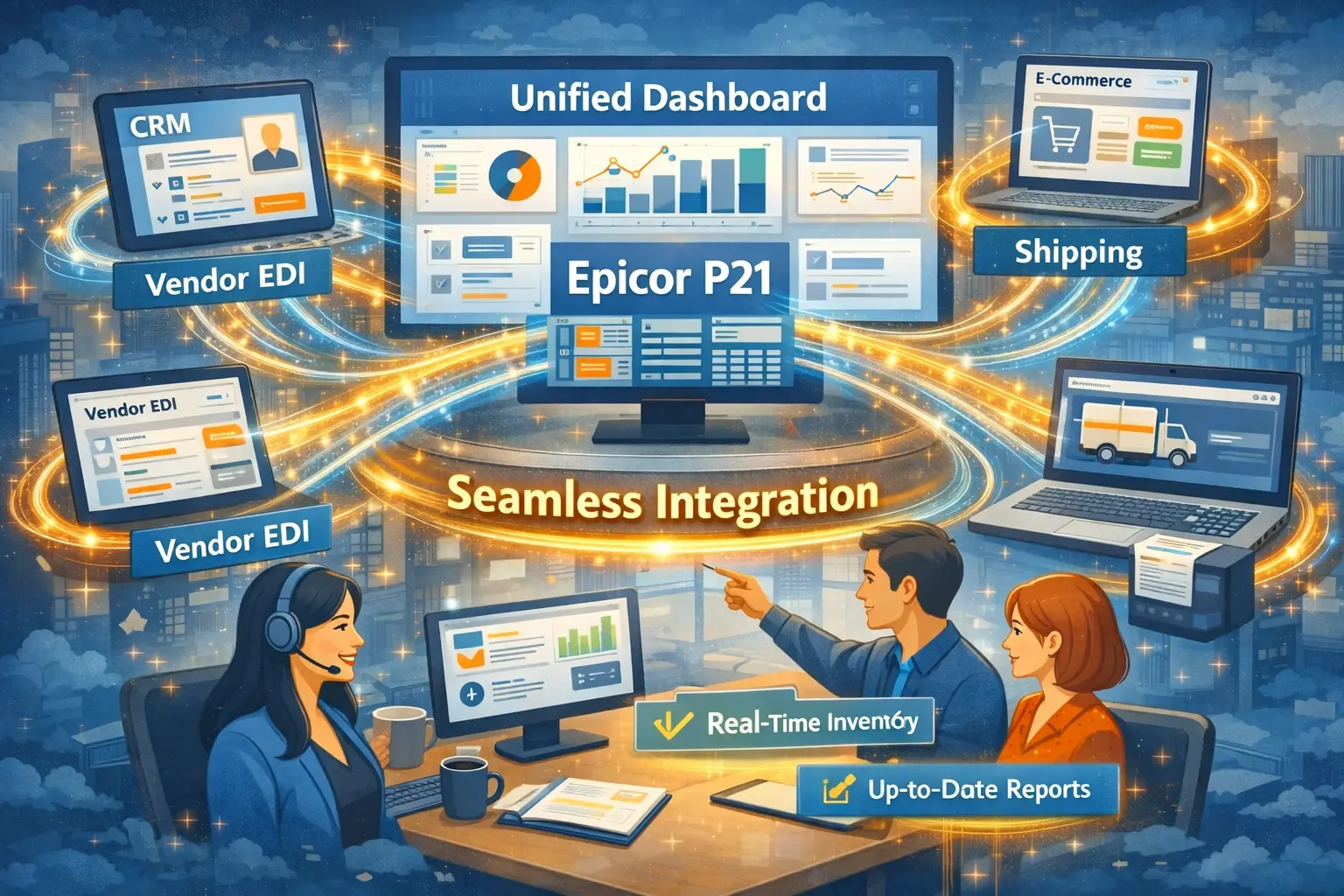
Integration doesn't mean replacing P21. It means extending it. You let data flow in and out automatically so that P21 remains your system of record while other tools handle what they do best.
For a distribution business, this typically means a few key connections. Vendor portals and EDI feeds should flow into P21 without manual entry. Customer-facing systems like ecommerce or CRM should pull real-time inventory and push orders directly. Reporting and dashboards should query P21 data without waiting for batch exports.
The technical approach varies. Some integrations use P21's built-in API capabilities. Others work through database-level connections or middleware platforms. The right method depends on what you're connecting, how frequently data needs to move, and what your team can maintain long-term.
The goal isn't to build something fragile that breaks when P21 updates. You want reliable, maintainable connections that your business can depend on.
Getting Started
If you're dealing with integration gaps, the first step is identifying where the pain is worst. What manual processes eat up the most time? Where do data discrepancies cause the most problems? Which disconnected systems create the biggest delays?
Start with one connection. Get it working reliably. Then move to the next. Trying to integrate everything at once is a recipe for a stalled project and frustrated teams.
The businesses that get this right don't necessarily have bigger IT budgets. They just approach integration as an ongoing operational priority rather than a one-time project. Data connections need monitoring, maintenance, and occasional updates as systems change.
Your P21 system has the data your business runs on. The question is whether that data is working for you everywhere it's needed, or whether it's trapped in one application while your team builds bridges by hand.
Uptimize Solutions helps manufacturers and distributors connect P21 to the systems their business depends on. If you're spending too much time on manual data entry or struggling with disconnected systems, learn more about our ERP integration services or contact us to discuss what integration could look like for your operation.